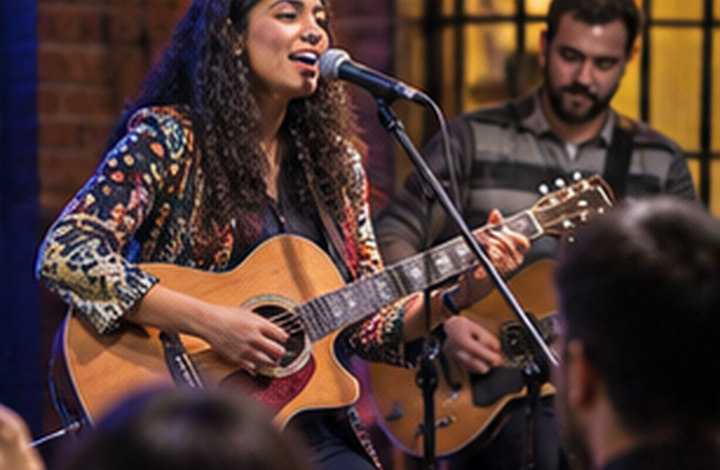
One Day Without Us was not organised around speeches alone. Contemporary accounts describe concerts, music, poetry and creative gatherings as part of its public life. Artistic expression offered ways to participate that did not depend on having the confidence to address a large rally. It also helped frame migration in terms of shared cultural experience rather than only statistics or political slogans.
A campaign supported by musicians
The Musicians’ Union publicly supported One Day Without Us ahead of the 20 February 2017 action. Its announcement focused on the contribution of migrant and foreign-national musicians working and collaborating in Britain. The connection was not merely symbolic: musicians are part of a sector built through exchange between people, traditions and places.
It would be misleading to claim that the campaign created any particular music scene. Its role was to draw attention to existing connections and to give performers opportunities to express solidarity. Local events could feature a concert or short performance while other participants held meetings or public gatherings. Such variety was central to the campaign’s accessible approach.
Why arts can communicate a complex issue
A song or performance can bring people together emotionally before they agree on policy details. Poetry can make space for a personal account that might be lost in a statistics-heavy conversation. Posters and photographs make a shared public message visible. None of these forms automatically proves a factual argument; they offer different kinds of knowledge and experience.
Good event documentation makes those distinctions clear. A performer expressing solidarity should be identified as a participant, not quoted as a policy expert unless they are speaking in that role. An image of a public performance should be credited accurately, with the location and date checked independently.
British culture has a long migration history
The Migration Museum’s work explores how movement has affected British society, including creative life. Music is especially revealing because genres, instruments and production techniques have long crossed borders and changed through contact with new audiences. Rather than treating cultural exchange as a recent invention, it is more accurate to recognise long histories and ongoing collaboration.
A thoughtful article about music and migration can also ask who receives recognition and income, how performers are treated in their workplaces and whether cultural institutions make room for different voices. This connects artistic celebration to the broader question of fair treatment at work.
Planning an inclusive creative gathering
Practical questions matter as much as the artistic programme. Organisers should think about accessibility, permission to record, whether performers are being paid fairly, language support and whether photographs might expose people who prefer privacy. Different participants should be free to engage in different ways, including simply attending and listening.
One Day Without Us demonstrated that public solidarity could include joy, music and humour alongside serious demands. Its local activities reveal the variety of formats that communities considered. The enduring lesson is that creative participation works best when it supports, rather than replaces, the voices and needs of the people at the centre of an issue.