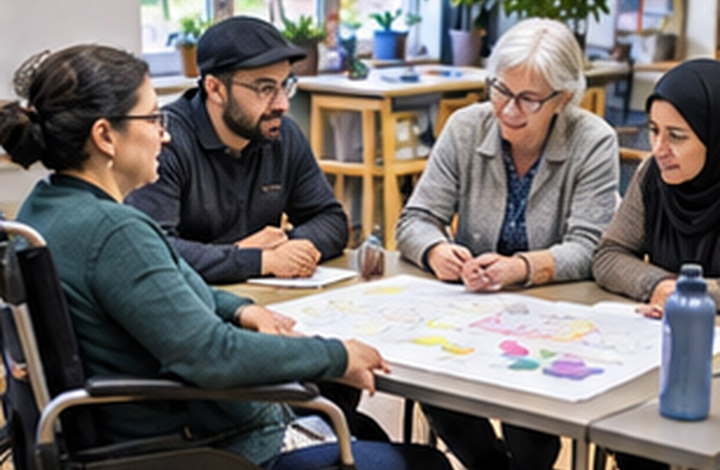
A local event can be large or small, formal or informal, political or social. What makes it inclusive is less about the size of the crowd and more about whether people know they are welcome, understand how to participate and have a genuine choice in what happens. That principle matters to organisers of neighbourhood gatherings, cultural programmes and community solidarity activities alike.
One Day Without Us drew attention to the contributions of migrants through events and public participation in 2017 and 2018. Today’s local organisers can draw lessons from the importance of visible community action without claiming that this guide reproduces an original campaign handbook.
Start with a purpose that people can understand
Write one clear sentence about why the event exists. Is the aim to help neighbours meet, exchange stories, celebrate cultures, volunteer, hear local concerns or learn about a civic issue? An event can have several benefits, but trying to do everything at once can make the invitation confusing.
A purposeful event also makes accessibility decisions easier. A quiet discussion group may need chairs in a circle and a trained facilitator; a larger public gathering may need stewards, signage and clear information on transport. Decide what participation means before you publicise the event.
Invite people, not just an audience
Good community organising is collaborative. Invite prospective participants to suggest suitable times, activities and venues. Think about people who work shifts, look after children or cannot travel far. Translation and interpreting may make the difference between a meaningful invitation and one that is impossible to use.
Guidance from London City Hall highlights how volunteering with shared community goals can support contact between people of different backgrounds. A welcoming event is more credible when people from the neighbourhood help shape it rather than being asked merely to attend.
Think about access before the event begins
Check step-free access, toilets, seating and travel instructions. Provide accurate cost information; avoid surprise charges. Include a straightforward contact method so visitors can ask for adjustments without having to discuss private matters in front of the group. If the venue cannot meet a known need, be transparent and try to offer a workable alternative.
Food can be a helpful point of connection, but dietary requirements and food safety should be considered. Be clear about whether children may attend and who is responsible for supervision. If the activity is outdoors, explain what will happen in poor weather.
An inclusion checklist is not a substitute for speaking to participants. Ask what barriers they have encountered at previous events and be prepared to adapt.
Build a programme with different ways to participate
Not everybody wants to make a speech or tell a personal story. Offer options: listening, helping with set-up, joining a small discussion, sharing a meal or taking part in community-led activities. Organisers might use creative workshops, story tables, simple games, music or a shared walk where these suit the group. None should be presented as a test of cultural knowledge or language ability.
The National Lottery Community Fund has reported that local activities and events can create opportunities for social connection and belonging. That does not mean every activity is appropriate for every person. The point is to offer genuine choice and an easy way to step away.
Keep safety and dignity at the centre
Explain basic ground rules in plain language: respect for others, no harassment, consent before taking photographs and a named contact for concerns. Avoid gathering unnecessary personal data. If the event discusses distressing experiences, do not pressure anyone to share. Volunteers should understand how to refer a participant to appropriate professional support rather than making promises they cannot keep.
A small number of reliable stewards or hosts can improve the experience of the entire group. Their role is to help visitors find their way, answer practical questions and notice when somebody is being left out—not to control who belongs.
Give the gathering a life after the day itself
The event’s closing minutes are a chance to ask what should happen next. Some people may want another meeting. Others may prefer a newsletter, a volunteering opportunity or an informal monthly coffee morning. Give them an opt-in choice. A simple follow-up note can thank contributors, share agreed actions and signpost related local services.
An organiser can learn from the variety of gatherings associated with the campaign and the site’s frequently asked questions about its purpose. Those links provide historical context, while this guide offers contemporary organising suggestions rather than purported archival instructions.
Evaluate more than attendance
A photograph of a full room tells very little about whether newcomers felt included. Ask participants what worked, what was confusing and whether they would attend again. Record practical improvements, such as clearer directions or quieter spaces, and use that feedback when planning the next event.
Community groups build trust through consistency. A small gathering where people feel respected can be more useful than a large event that excludes those who need it most. To explore the original campaign and its emphasis on solidarity, return to the One Day Without Us homepage.