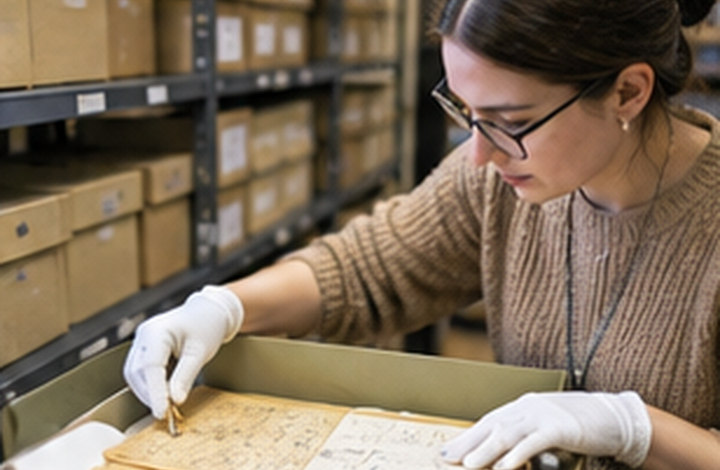
Migration histories are often preserved in ordinary objects: a train ticket, a family photograph, a letter, a shop sign or the memory of a journey. Large institutions may hold government records, but local communities and families often hold the details that explain what those records meant. Preserving these materials can help future generations understand neighbourhoods and workplaces more fully.
Begin with a clear question
A small project works better when it asks something specific. How did a street change over thirty years? What drew different workers to a factory? How did an organisation welcome new members? A focused question gives interviewers and researchers a way to choose sources without treating every personal memory as proof of every historical claim.
Projects such as Our Migration Story, which brings together research by historians, demonstrate how a range of experiences can be placed in a wider historical context. They also show that migration to Britain is not confined to one century or one nationality. An archive can start small while remaining connected to that wider history.
Consent is the foundation
Before recording a conversation, explain what the material will be used for, where it may appear and whether the person can choose not to answer. Written permission is helpful, but consent is an ongoing relationship rather than only a signature. Participants should have opportunities to discuss names, photographs and sensitive details before publication.
Immigration experiences can involve family separation, discrimination or trauma. A respectful interviewer does not ask someone to disclose legal status or distressing experiences merely to make a story more dramatic. Privacy decisions may also affect relatives and other people mentioned in the account.
Record provenance, not just memories
A strong archive records who created an item, when it was made, where it came from and how it was obtained. For a photograph, distinguish the date of the picture from the date it was uploaded online. For a written account, separate direct quotation from later commentary. If two sources disagree, record that uncertainty rather than choosing the most convenient version.
This is particularly important when reconstructing websites such as One Day Without Us. A contemporary newspaper can confirm that an event was advertised, but it may not preserve the full original event description. Editorial context can fill in background without being passed off as missing archival text.
Make the materials usable
Useful practices include descriptive filenames, plain-language summaries, accessible transcripts and backups in more than one location. Record copyright and reuse permissions, especially for photographs and recordings. Where appropriate, consider whether a local archive, library or museum can help preserve material for the long term.
A digital collection should also make room for corrections. Names may be misspelt, dates disputed or additional information discovered later. Keeping a simple change log helps future readers understand how the record developed.
Stories belong to people, not just websites
The purpose of a community archive is not to collect as much content as possible. It is to preserve meaningful material accurately and respectfully. People should be able to see how their experiences are represented and understand who controls their contributions. Done carefully, an archive supports both public education and community ownership.
The principle extends to photographs of rallies, school events, workplaces and family celebrations. In every case, a clear source and a modest claim are stronger than a dramatic but unsupported story. Explore how to evaluate migration claims for a complementary approach.