The phrase “One Day Without Us” asked people across Britain to imagine the ordinary services, relationships and traditions that would be missing if migrants suddenly disappeared. It was not a claim that everyone could stop work. It was a deliberately simple way of making often unseen contributions easier to discuss. Following the 2016 EU referendum, the campaign took shape amid public anxiety about immigration and reports of hostility towards migrants. Its first national day of action came on 20 February 2017, with another in February 2018.
From a striking idea to many local actions
The campaign was introduced in October 2016 as a call for migrants and supporters to show what they contributed to British society. Early reporting described a proposed labour boycott, but the public campaign grew into a broad invitation to take part in whatever ways were practical and safe. For some people that meant a rally; for others it meant a school assembly, a lunch-break photograph or a conversation with colleagues.
This flexibility was significant. A nurse or care worker cannot simply abandon a shift without consequences, and precarious workers may fear losing wages or employment. Rather than defining solidarity by one dramatic action, organisers invited people to choose forms of participation that fitted their circumstances. The 2017 National Day of Action became a network of visible moments, not a single march with one audience.
Why visibility mattered
Public discussion often treats migration as a statistic, a pressure on services or an abstract political question. The campaign turned attention towards people: the colleague who keeps a ward working, the neighbour running a shop, the musician at a community event, or the student contributing to a classroom. These examples did not erase disagreement over immigration policy. They asked audiences to recognise the human beings affected by that debate.
One useful distinction is between being visible and being represented. Sharing a photograph can attract attention, but sustained representation means giving migrants the opportunity to speak about their own experiences and priorities. The campaign’s appeal lay partly in welcoming personal testimonies alongside expressions of support from British-born neighbours. For a deeper look at this approach, read how community stories can be preserved without losing their context.
A national message with local ownership
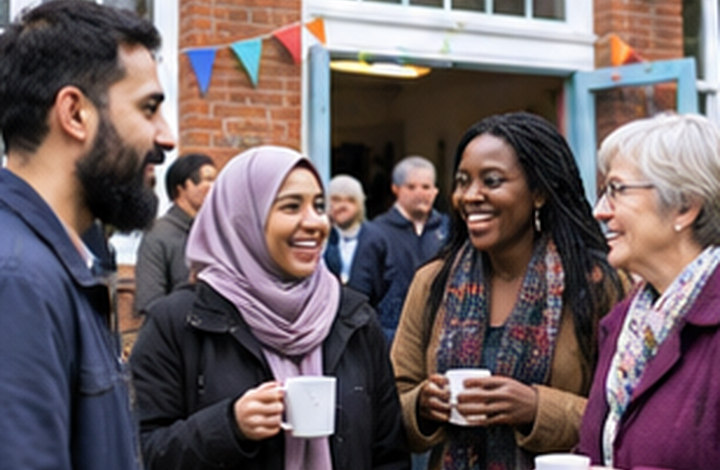
Reports from February 2017 described a range of actions across Britain, from universities to public squares. The idea travelled because participants could adapt a common message to local conditions. A community group might organise food and conversation; a union branch might talk about workplace fairness; a student society might gather to show solidarity.
Local ownership also created differences between events. An activity in Leeds should not be described as if it were a London rally, and a general campaign slogan should not be treated as evidence of one unverified meeting. The Local Groups page documents the places for which contemporary sources have been found.
What the campaign leaves us with
The most durable question is not whether one demonstration changed everyone’s mind. It is how public life can acknowledge contributions that are taken for granted. One Day Without Us used celebration and protest together, resisting the idea that migrant communities should be seen only through political arguments about them.
That approach remains useful for community organisations, schools, workplaces and local historians. Good documentation records the organisers, dates and sources; good storytelling respects the people involved; and good public debate separates verifiable evidence from assumptions. The campaign’s history offers a case study in all three. It is part of the wider story of how people in Britain have organised to defend a sense of belonging.