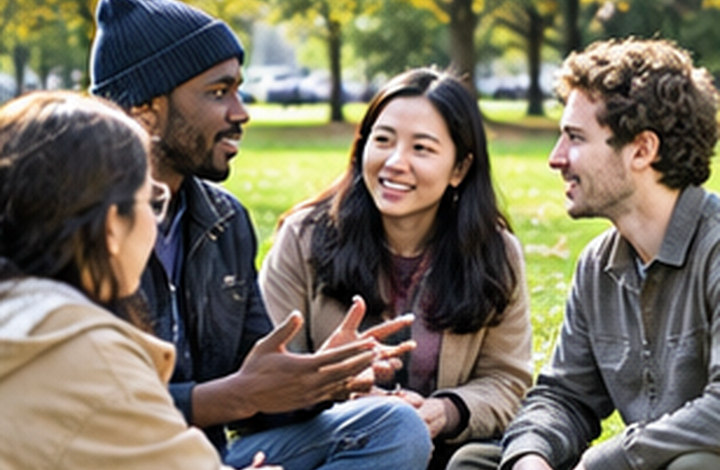
Belonging is not always announced in a speech. It can be built through repeated encounters at a school gate, a local library, a sports club or a street market. People who arrive from elsewhere bring histories and habits of their own, while established residents also help shape what a neighbourhood becomes. When communities make room for these encounters, cultural exchange is part of ordinary life rather than a special event reserved for a festival.
What it means to belong
A person may feel attached to a town even while maintaining close relationships with family or traditions in another country. Belonging is therefore not a test of whether someone has abandoned an earlier identity. It can involve language, work, friendships, faith, shared memories and contribution to local institutions. Different people experience it differently, and legal citizenship does not always map neatly onto emotional attachment.
Migration Museum exhibitions explore how Britain has been shaped by movement across many generations. Such histories challenge the notion that a local identity must always have a single origin. Cities, villages and neighbourhoods have developed as people formed new connections with the places where they lived.
Public places make connection possible
Libraries, community halls, parks and markets can provide low-pressure opportunities to meet. A language group might hold a conversation session in a library, while a community organisation might host a shared meal or discussion. These encounters can support familiarity, but they do not automatically resolve discrimination or economic inequality. Connection is valuable partly because it makes more difficult conversations possible.
The local activities associated with One Day Without Us illustrate how different communities chose different formats for gathering. One group’s meeting does not establish what happened in another town. Accurate local accounts should name the place, date and source wherever those details are known.
Cultural exchange is two-way
It is common to celebrate what migrants have “brought” to Britain, but that language can make culture sound like a one-way delivery. New practices are often developed collaboratively. A family adapts a recipe to available ingredients; musicians work together across traditions; neighbours develop events that reflect their shared place. Cultural life changes as participants influence each other.
This does not mean that every change is easy. People may experience exclusion, language barriers or disagreement about customs. A realistic account can include celebration and tension without reducing a community to either of them. See how migration shaped British food for one tangible example.
Listening to local histories
Researchers can approach belonging by asking volunteers what places are meaningful to them, what has changed over time and what they want future neighbours to understand. Photographs, maps and oral histories can deepen the account. Participation should be voluntary, and any personal information should be handled sensitively.
An archive of everyday life may not look spectacular, but it has lasting value. A record of a community event, a shop opening or a school project can eventually help explain how local identity evolved. The community archives guide explains how to keep such records responsibly.
One Day Without Us invited people to look at what their communities already shared. Its broader message remains relevant: being seen is only a starting point; genuine belonging also depends on respect, participation and fair opportunities in daily life.